Ten of Swords
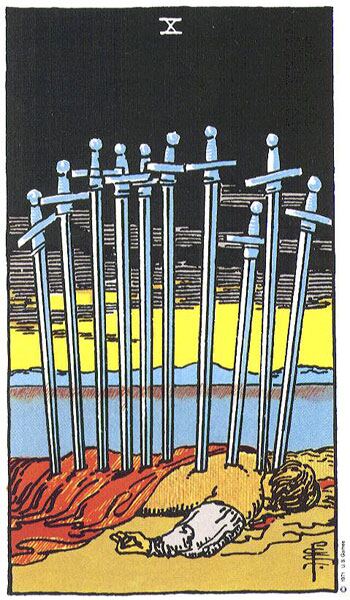
Let us examine one of the most striking cards in the tarot in depth—the Ten of Swords. With its blunt and somewhat brutal imagery, this card symbolizes ending, pain, failure, betrayal, and ultimate release. It marks the complete end of a painful cycle or situation, often accompanied by tremendous shock and a sense of powerlessness.
Card Imagery (based on the Rider-Waite-Smith system)
- Central image: A person (usually male) lies face down on a dim shore or ground.
- Key elements:
- Ten long swords: Ten long swords are driven deeply into the figure's back, densely arranged and covering nearly the entire back, with several piercing through the body. This is the most central and striking element of the card.
- Posture: The figure lies completely prone, arms limply spread or covering the head, a posture conveying extreme pain, despair, total defeat, and powerless submission.
- Environment and sky:
- Dark sky: The background sky is usually deep black or ink-blue, symbolizing despair, a dark period, and an overwhelming weight.
- The glimmer of dawn (crucial!): Above the distant horizon, the sky gradually brightens, with yellow-golden light like approaching dawn. This is one of the most important symbolic elements of the entire card, hinting at light at the end of the darkness and rebirth after ending.
- Water/shore: The figure lies prone near the water's edge, the surface calm. Water symbolizes emotion and the subconscious; the calm surface may indicate the subsiding of the storm after the fact, or it may suggest emotional depletion or numbness.
- Energy atmosphere: Tragic, sharp pain, total defeat, the despair of betrayal, irreversible ending, a strong sense of victimization—yet also carrying a measure of post-ending calm and a faint hope for the future (from the light of dawn).
Key Symbolic Elements and Energy Reading
- The ten long swords (backstabbing):
- Total ending and destruction: In the tarot, "ten" represents the completion and conclusion of a numerical sequence (1+2+3+4=10). The ten swords signify that harm, pain, negative thoughts, or external blows have reached their peak and final state.
- Extreme pain and trauma: The back is a vulnerable and hard-to-defend area; being stabbed there symbolizes backstabbing, profound betrayal, defenseless blows, and enormous psychological pain (the embodiment of "a heart pierced by swords").
- Excessive harm / the killing blow: The number of swords (ten) and their placement (especially the one beneath the head) often suggests that the harm is devastating, excessive, even "fatal" (a symbolic ending, not necessarily physical death).
- The prone posture:
- Total defeat and surrender: The figure has fallen completely, with no capacity to resist, symbolizing the end of the battle, total collapse, surrender, and being utterly defeated.
- Victimhood and powerlessness: The posture conveys a strong sense of victimization, helplessness, despair, and mental breakdown.
- The dark sky:
- Profound despair and darkness: Symbolizes extreme pessimism about the current situation—seeing no way out, being entirely engulfed by negative emotions (fear, sorrow, anger).
- The glimmer of dawn (on the horizon):
- Hope and rebirth after the end: This is the most positive and most crucial element in the Ten of Swords. It tells the viewer unambiguously: the darkest moment has passed (or is about to pass); the ending signifies that a new beginning is at hand. The pain is severe, but it is the end of a cycle. The dawn represents purification, restoration, new understanding, and the release that follows letting go.
- The calm water:
- The emotional storm has passed / numbness: It may indicate that intense emotional conflict has finally subsided (whether through ending or sheer exhaustion), or it may hint at emotional depletion or a state of numbness.
- The red cloak/garment:
- Vitality, passion, sacrifice (uncertain): The figure often wears red clothing or a cloak. Red symbolizes vitality, passion, and the capacity for action. At this moment it may represent faded vitality, sacrifice, or lingering life force. Some also hold that in the tarot red represents the material world, contrasting with the spiritual/mental swords and suggesting that the material plane may also be severely damaged (though this reading is not universally accepted).
- Overall energy: The extreme negative expression of the Air element (Swords suit)—devastating thoughts, verbal harm, cruel truths, total logical conclusion. The energy is heavy, sharp, painful, and final, but at its core it carries release, ending, and a faint yet definite ray of hope.
Origins & Archetypes
- The number 10: Represents the absolute completion and conclusion of a cycle. It is the endpoint of the old cycle, clearing the way for the next new cycle (the 1 card). It contains the sum and conclusion of all the minor arcana numbers (1 through 9).
- Archetypes:
- The "Martyr" or "Total Loser": The figure who has borne the ultimate blow and suffering.
- The victim of "backstabbing": The archetype of profound betrayal, harmed by the person or thing most trusted.
- "The darkness before dawn": Symbolizes the turning point at which, after reaching the worst and most despairing extreme, things must turn toward the light. It shares a spiritual kinship with the phoenix rising from the ashes.
- "Necessary death": Symbolizes the symbolic death of old patterns, attachments, painful relationships, or unsustainable situations—the necessary path to rebirth.
Inner Meanings in Detail
Upright Meaning
- Core themes: Total ending, profound pain, devastating failure, cruel betrayal, victimhood, irreparable loss, release after sharp pain, approaching dawn.
- Main scenarios / readings:
- A felt ending: A situation, relationship, project, plan, belief, or life stage may feel painfully and suddenly finished. The image can describe finality without claiming that every practical option is gone.
- Extreme pain and trauma: Experiencing significant loss, betrayal (especially a stab in the back from a trusted person), blow, health crisis (especially mental breakdown or after major surgery/illness), and enormous psychological pain.
- Total failure and collapse: A devastating defeat in competition, conflict, or effort—feeling utterly crushed, with no hope left.
- Victimhood and powerlessness: A strong sense of being a victim, of having suffered injustice, feeling helpless, despairing, mentally broken.
- "The straw that broke the camel's back": Accumulated pressure, problems, or wounds reaching a tipping point, triggering a final, total collapse.
- Letting go and release (crucial!): Although the process is painful, this total ending also means the end of pain and final release. You have hit rock bottom; there is no need to struggle further—the worst has already happened or is happening. What follows is the relief of laying down the burden (even if it cannot yet be felt).
- The darkness before dawn: The pain is real, but hope exists. The dawn light in the image clearly signals: this ending is necessary; it paves the way for new life. After the pain comes restoration, rebuilding, and a new beginning. This is one of the most important messages this card conveys.
Reversed Meaning
- Core themes: Delayed ending, prolonged pain, gradual recovery, refusing to accept the ending, residual pain, averting total collapse, post-traumatic aftermath.
- Possible positive shifts / relief:
- Avoiding the worst: The "killing blow" may not have fully landed, or its devastating effects have been partly mitigated. Total collapse has been averted.
- A slow recovery period: The most painful peak may have passed, but recovery is a long and gradual process. You are slowly rising from the trauma.
- Drawing out the swords (healing): Symbolizes beginning to address the wounds—drawing out the negative thoughts, memories, or influences that "stabbed" you. Psychological or emotional healing begins.
- Releasing residual pain: Although it is over, lingering pain, resentment, or fear remains to be faced and released.
- Beginning to accept the ending: Beginning (perhaps reluctantly) to accept that things have ended.
- Possible negative continuations / distortions:
- Delayed pain and slow torment: The process of ending is drawn out; the pain is continuous, chronic torment rather than a single sharp blow—more "death by a thousand cuts" than a clean cut. The situation remains unresolved, continually draining energy.
- Refusing to accept reality / denying the ending: Refusing to admit that things are over, refusing to let go, wallowing in the victim role, unable to begin recovery. (Here the figure may seem to be "struggling to rise" or "trying to pull out the swords.")
- Reinforcing victim mentality: Sinking deeper into self-pity and victimhood, viewing oneself as fate's casualty, struggling to take responsibility or act to change.
- Repeated trauma / recurring nightmares: Past trauma or failure continues to affect the present, lingering like a ghost (PTSD).
- Swords not fully drawn: Some problems or wounds have not been thoroughly resolved, becoming hidden dangers that may flare up again in the future.
Application in Common Question Scenarios
- Work / Career:
- Upright: A project fails completely; being fired (especially in a sudden, unfair manner); company bankruptcy; a major setback or ending in one's career; workplace betrayal (such as being framed by a colleague). Conclusion: Reality must be faced; this chapter must end, and preparation for a new beginning must begin.
- Reversed: Living for a long time under the anxiety of impending dismissal; a project dying slowly, continually delayed and draining energy; a messy departure process; past failures continuing to haunt a new job. There is a need to actively end the draining state or to actively heal old wounds.
- Love & Relationships:
- Upright: The complete breakdown of the relationship (breakup/divorce), usually accompanied by profound harm (such as discovering long-term deception, major betrayal). Heartbroken, feeling utterly destroyed. A clear declaration of ending—painful but clean.
- Reversed: A painful breakup process (entanglement, back-and-forth); a relationship that exists in name only yet lingers on without ending (mutual torment); unable to move on for a long time after a breakup; past relationship trauma affecting a new relationship. A genuine closure and active healing are needed.
- Finance: May invite a review of resources, priorities, and risk; it cannot predict investment returns or guarantee a financial outcome.
- Upright: May invite a review of resources, priorities, evidence, and risk; it cannot predict returns or guarantee a financial outcome.
- Reversed: May bring financial pressure, uncertainty, or the need to revise a plan into focus; it cannot predict loss or guarantee an outcome.
- Health: May bring wellbeing, rest, routines, or support needs into focus; it cannot diagnose illness or predict recovery.
- Reversed: May bring fatigue, stress, or support needs into reflection; it cannot diagnose illness or predict recovery.
- Mindset / Personal Growth:
- Upright: The "death" of an old self / old pattern (such as a deeply rooted obsession, a toxic belief, a self-destructive habit). After great pain comes insight and letting go. "Place oneself in a position of death and be reborn."
- Reversed: Unable to extricate oneself from pain; refusing to change old patterns; victim mentality obstructing growth; past psychological trauma continuing to affect the present. Professional help or profound self-healing work is needed.
- Other:
- Upright: Total collapse of trust; ruined reputation; complete disillusionment of a dream; the miscarriage of a major life plan.
- Reversed: A slow erosion of trust; long-term low self-esteem or pessimism; unresolved legal disputes.
Summary & Reading Notes
- Core message: The core of the Ten of Swords lies in total ending—an ending accompanied by immense pain, but one that is simultaneously the end of pain and inevitably heralds a new beginning (the light of dawn). It depicts the state of "rock bottom."
- The symbolism of "death": In the tarot, it is the minor card closest in energy to "Death" (Major Arcana XIII), but it focuses more on the ending of mind, plans, beliefs, or specific situations, rather than physical death or overall transformation (the Major Arcana "Death" operates at a higher level). It is more like the manifestation of "Death" in specific events (especially those involving thought, conflict, and communication).
- Upright: Accept the ending, see the hope. Although the image is horrifying, the upright card carries a clear signal of hope (the dawn). It forces you to accept the ending and to stop futile struggle, thereby attaining release and making room for new life. "When the Ten of Swords appears, the worst has already happened (or is about to), but it is also over."
- Reversed: Attend to process and residual issues. The reversed card emphasizes the process of ending—its pain, delay, and repetition—or the recovery, residual problems, and mindset adjustment that follow the ending. It may be more agonizing (slow torment), or it may mark the beginning of improvement (slow recovery).
- Psychological dimension: This card is strongly associated with victimhood, despair, and post-traumatic stress responses (PTSD). In reading, pay close attention to the querent's psychological state and coping methods.
- Uncertainties / additional notes:
- Regarding "the dawn": The meaning of hope in Waite's design of the dawn's light is clear. Yet some modern readers overlook this point and overemphasize despair. Note: Ignoring the dawn element in the image leads to a serious misreading of the Ten of Swords' core message.
- Physical death? The tarot is primarily used for symbolic reading. The Ten of Swords rarely may suggest physical death directly (that is the domain of the Major Arcana "Death" or, in some cases, "The Tower"). It more often symbolizes mental breakdown, the "death" of a situation, or the "heart-death" brought on by a major setback.
- "Who planted the swords"? The image does not clearly show the perpetrator; the focus is on the victim and the state of ending. The harm may come from another's betrayal, one's own mistakes, an abrupt change in circumstances, or force majeure. When reading, analyze the root cause in conjunction with the specific context and surrounding cards.
- Does the reversed card "improve"? Reversed does not directly equate to "things getting better." It may indicate that the worst was averted, but it may also indicate that things are worse (long-term torment). It must be judged from context whether it means "pain easing / recovery beginning" or "ending delayed / pain continuing."
The Ten of Swords is a deeply challenging card that also carries profound wisdom. It reminds us that some endings in life are brutal and painful, but only by undergoing such a complete ending, embracing the release that follows, and seeing the inevitable rising light of dawn can we truly walk out of the darkness and welcome new life. It asks us to face our deepest pain and to trust that upon the ruins, rebuilding is the only option—and the new starting point.
Waite's 1910 Pictorial Key Entry
Historical source note: The following records A. E. Waite's card-specific divinatory vocabulary from the supplied 1910 edition. It belongs to one early-twentieth-century method, not a universal meaning system or a guarantee. Historical references to illness, marriage, loss, or other high-stakes outcomes are not diagnoses, professional advice, or certain predictions.
- Upright (Waite): Whatsoever is intimated by the design; also pain, affliction, tears, sadness, desolation. It is not especially a card of violent death.
- Reversed (Waite): Advantage, profit, success, favour, but none of these are permanent; also power and authority.
Source: A. E. Waite, The Pictorial Key to the Tarot (1910), Part III, § 2.